

From the Trainer’s Notebook: Your Puppy Isn’t Broken, (or stubborn) They’re Growing
One of the most common conversations I have with new puppy parents goes something like this:
“We’re mostly struggling with leash walking, puppy biting, and picking everything up off the ground. We probably just need a lesson or two.”
I understand why people think that.
If leash pulling is the problem, it makes sense to think you just need to teach loose-leash walking. If puppy biting is the problem, it feels like we should just stop the biting.
But puppies don’t grow that way. Today’s challenge usually isn’t tomorrow’s challenge.
Your Puppy Is Learning More Than Leash Manners

A five-month-old puppy isn’t simply learning how to walk politely on a leash. They’re learning about the world.
They’re figuring out what is safe, what is exciting, what earns attention, how to control their impulses, how to calm themselves, and how to communicate.
Leash pulling, picking up sticks, grabbing mulch, nipping sleeves, jumping on visitors—these aren’t usually completely separate problems. They’re different expressions of the same developing puppy.
When we focus only on fixing one behavior, another challenge often appears a few weeks later because the puppy has entered a new stage of development.
Puppies don’t learn in isolation, and dogs don’t generalize particularly well. Learning something in the quiet living room doesn’t automatically mean they understand that the same expectation applies on a busy sidewalk, at Grandma’s house, or when an exciting new person walks through the door.
That’s part of why puppy training is a process rather than a lesson or two.
Everything Starts to Connect
One of the things I love most about training puppies is watching everything connect.
The puppy who learns to check in with their person on a walk usually becomes easier to redirect when they find something interesting on the ground.
The puppy who practices impulse control while waiting for dinner often begins showing more self-control in other parts of life.
The puppy who develops confidence while safely exploring the world may be less likely to respond out of fear when something unfamiliar happens later.
Very few behaviors exist completely on their own.
That’s why I rarely want to teach a behavior in isolation. Instead, I want families to understand why the behavior is happening in the first place.
Every Stage Brings Something New
Think about everything puppies are learning during their first year.
Around eight to twelve weeks, families are often focused on potty training, sleeping through the night, and surviving those sharp puppy teeth.
A few months later, the focus shifts to leash walking, greeting people politely, settling when they’re excited, and discovering that apparently everything on the ground belongs in their mouth.
Then adolescence arrives.
Suddenly the puppy who seemed to know “sit” yesterday has discovered selective hearing. Confidence grows. Distractions become much more exciting. Impulse control gets tested every day.
None of this means training stopped working.
It means your puppy kept growing.
Training isn’t always about fixing today’s problem. It’s about setting your puppy—and yourself—up for an easier, happier, and more enjoyable future together.
What I’m Really Trying to Teach

When I work with a family, yes, we’ll absolutely improve leash walking.
We’ll work on puppy biting.
We’ll practice leaving things on the ground instead of eating them.
Those things matter.
But what I’m really hoping to teach isn’t just a loose leash or a better “leave it.” I’m teaching families how to understand their puppy.
Once you understand why your puppy is behaving the way they are, you’re no longer waiting for someone to tell you exactly what to do every time something new pops up. You begin to have the knowledge and confidence to work through it together.
That’s a skill that lasts long after puppyhood.
There isn’t a finish line where a puppy suddenly knows everything they’ll ever need to know.
There are stages. There are setbacks. There are exciting breakthroughs followed by brand-new challenges.
That’s normal.
And it’s honestly one of my favorite parts of watching puppies grow into wonderful adult dogs. Not because every day is easy, but because every stage gives us another opportunity to build trust, communication, and understanding.
Sometimes the “New” Behavior Isn’t New at All
I see the other side of this years later when families contact me about their adult dogs.
Many adult dog behavior consultations begin with some version of, “This is a new behavior.”
Sometimes it is.
But quite often, when we start talking through the dog’s history, we discover that the behavior isn’t really new at all. It quietly grew and evolved until it finally became a problem for the family.
Maybe jumping was cute when the puppy weighed 15 pounds, but now they’re 70 pounds and knocking over visitors.
Maybe picking things up was dismissed as “just being a puppy,” but now the adult dog has learned that grabbing tissues, socks, or whatever else they can find is a great game.
Maybe pulling on the leash was manageable when the dog was small, but now every walk feels like a workout.
The behavior didn’t suddenly appear.
The puppy simply grew up.
Dogs Become Good at What They Practice
Dogs become good at whatever they practice.
Every time a behavior is repeated, it becomes a little more familiar and a little more likely to happen again.
That isn’t about blaming families for something they should have done differently. Most people simply didn’t know that the silly or mildly annoying puppy behavior they were seeing could become something much harder to live with later.
That’s why I spend so much time helping families understand why a behavior is happening instead of simply telling them how to stop it.
When we understand the reason behind a behavior, we have an opportunity to teach a better alternative before the unwanted behavior becomes a well-practiced habit.
Sometimes the Dog Isn’t the One Who Changed
Life changes, too.
A couple has their first baby. Kids start inviting friends over. Someone who worked from home starts going back to the office—or someone who was gone all day suddenly starts working from home.
Families move. Schedules change. New pets arrive. People get older.
The dog who happily lived in a relatively quiet household may suddenly be navigating toddlers, visitors, deliveries, neighborhood activity, different schedules, or less one-on-one time.
What looks like a new behavior may actually be an old behavior showing up differently because the circumstances changed.
Understanding how dogs learn and adapt helps families navigate those transitions together instead of feeling blindsided by them.
Today’s Puppy Becomes Tomorrow’s Dog
Every week I meet wonderful dogs whose families love them deeply. Many of the behaviors they’re struggling with aren’t because anyone did something wrong. They simply didn’t know what to watch for while their dog was growing.
Some of the adult-dog behaviors that eventually overwhelm families could have been prevented—or at least made much easier to manage—if someone had helped the family understand what their puppy was communicating months or years earlier.
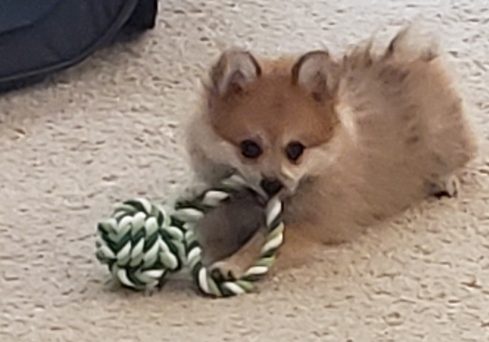
That’s one of the reasons I don’t look at puppy training as a quick fix for leash pulling, biting, jumping, or eating mulch.
My goal isn’t just to help with today’s challenge. It’s to help families recognize tomorrow’s before it becomes next year’s.
Your dog deserves more than quick fixes. They deserve a foundation that grows with them.
That’s the approach we take with dog and puppy training for Kansas City families at Loving Arms Pet Services. I don’t teach dogs one behavior at a time. I teach families how to understand the dog in front of them so they know what to do as that dog grows, learns, and changes.
If you’re in Kansas City and need help with your puppy or dog, visit our dog training page to learn more and schedule a discovery call.

